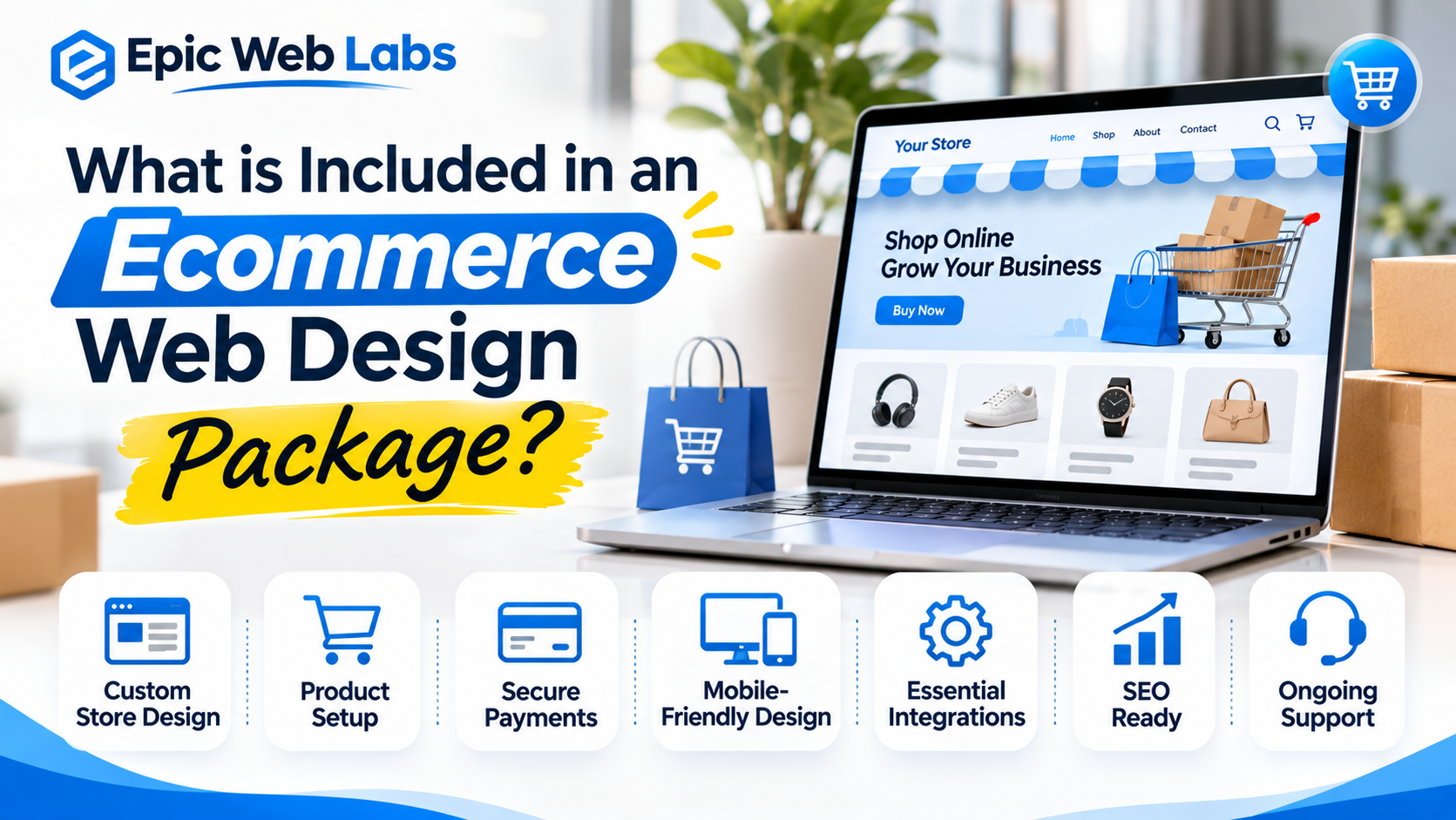
What is Included in an Ecommerce Web Design Package?

What is Included in an Ecommerce Web Design Package?
Building online stores takes serious effort. E-commerce sites act as digital storefronts. Web designers usually offer structured packages. Understanding package features saves your budget.
So, what is included in an ecommerce web design package?
Branding
Every package includes core basic features. Branding integration matches your visual identity. Web designers customize your pre-built templates. Premium tiers offer completely custom layouts. Designers create custom homepages for shoppers.
Mobile Optimization
Mobile responsiveness is vital for sales because smartphones drive most online buying traffic. Responsive sites adjust across all screens. Clean mobile layouts stop lost sales.
Catalog
Catalog setup helps organize your inventory. Keeping this in mind, developers establish categories and subcategory pages. Filtering systems help shoppers find items. Furthermore, packages include uploading initial product data. Designers configure item colors and sizes.
Payment
Payment gateways turn browsers into buyers with popular options including Stripe and PayPal. Developers configure safe and secure checkouts, and automated tax systems calculate customer costs. SSL encryption keeps all data safe.
Stock
Shopping carts track active customer orders. However, backend systems manage current stock levels. Automated order emails confirm every purchase. Flat shipping rules keep checkout clear. Real-time carrier rates show exact shipping.
SEO
Technical features boost total search performance. Essential search engine optimization comes included. Page titles and meta tags change. Search engines index your new pages. Sitemaps speed up Google search crawling.
Security
Store security protects customer payment data. SSL certificates protect every payment page. Firewall setups block online safety threats. Privacy banners maintain basic legal compliance.
CMS
Content management systems allow easy edits. Platforms include Shopify and WordPress WooCommerce. Managers edit stock without writing code. Staff users manage catalog inventory easily.
Analytics
Analytics tools show clear site traffic. Google Analytics tracks actual shopper data. Pixels measure real social media ads. Data helps increase total online revenue.
Packages
Package tiers match different business budgets. Starter plans fit very small catalogs. Standard options offer custom tool integrations. Enterprise packages serve large established brands.
Post-Launch
Post-launch support ensures long-term success. Developers provide training for store managers. Staff learn to handle refund requests. Warranty periods cover initial code bugs. Maintenance plans keep sites running smoothly.
Frequently Asked Questions
What extra costs are excluded?
Domain names require separate annual payments. Hosting services charge monthly server fees. Payment processors charge per store transaction. Premium plugins often require separate licenses.
How long does building take?
Basic template stores take four weeks. Standard custom sites take eight weeks. Enterprise projects take several months. Timelines always depend on overall scope.
Can store owners update items?
Modern platforms offer easy admin dashboards. Staff add new products without code. Updating prices takes just a few clicks. Web designers provide complete dashboard training.Building online stores takes serious effort. E-commerce sites act as digital storefronts. Web designers usually offer structured packages. Understanding package features saves your budget.
So, what is included in an ecommerce web design package?
Branding
Every package includes core basic features. Branding integration matches your visual identity. Web designers customize your pre-built templates. Premium tiers offer completely custom layouts. Designers create custom homepages for shoppers.
Mobile Optimization
Mobile responsiveness is vital for sales because smartphones drive most online buying traffic. Responsive sites adjust across all screens. Clean mobile layouts stop lost sales.
Catalog
Catalog setup helps organize your inventory. Keeping this in mind, developers establish categories and subcategory pages. Filtering systems help shoppers find items. Furthermore, packages include uploading initial product data. Designers configure item colors and sizes.
Payment
Payment gateways turn browsers into buyers with popular options including Stripe and PayPal. Developers configure safe and secure checkouts, and automated tax systems calculate customer costs. SSL encryption keeps all data safe.
Stock
Shopping carts track active customer orders. However, backend systems manage current stock levels. Automated order emails confirm every purchase. Flat shipping rules keep checkout clear. Real-time carrier rates show exact shipping.
SEO
Technical features boost total search performance. Essential search engine optimization comes included. Page titles and meta tags change. Search engines index your new pages. Sitemaps speed up Google search crawling.
Security
Store security protects customer payment data. SSL certificates protect every payment page. Firewall setups block online safety threats. Privacy banners maintain basic legal compliance.
CMS
Content management systems allow easy edits. Platforms include Shopify and WordPress WooCommerce. Managers edit stock without writing code. Staff users manage catalog inventory easily.
Analytics
Analytics tools show clear site traffic. Google Analytics tracks actual shopper data. Pixels measure real social media ads. Data helps increase total online revenue.
Packages
Package tiers match different business budgets. Starter plans fit very small catalogs. Standard options offer custom tool integrations. Enterprise packages serve large established brands.
Post-Launch
Post-launch support ensures long-term success. Developers provide training for store managers. Staff learn to handle refund requests. Warranty periods cover initial code bugs. Maintenance plans keep sites running smoothly.
Frequently Asked Questions
What extra costs are excluded?
Domain names require separate annual payments. Hosting services charge monthly server fees. Payment processors charge per store transaction. Premium plugins often require separate licenses.
How long does building take?
Basic template stores take four weeks. Standard custom sites take eight weeks. Enterprise projects take several months. Timelines always depend on overall scope.
Can store owners update items?
Modern platforms offer easy admin dashboards. Staff add new products without code. Updating prices takes just a few clicks. Web designers provide complete dashboard training.